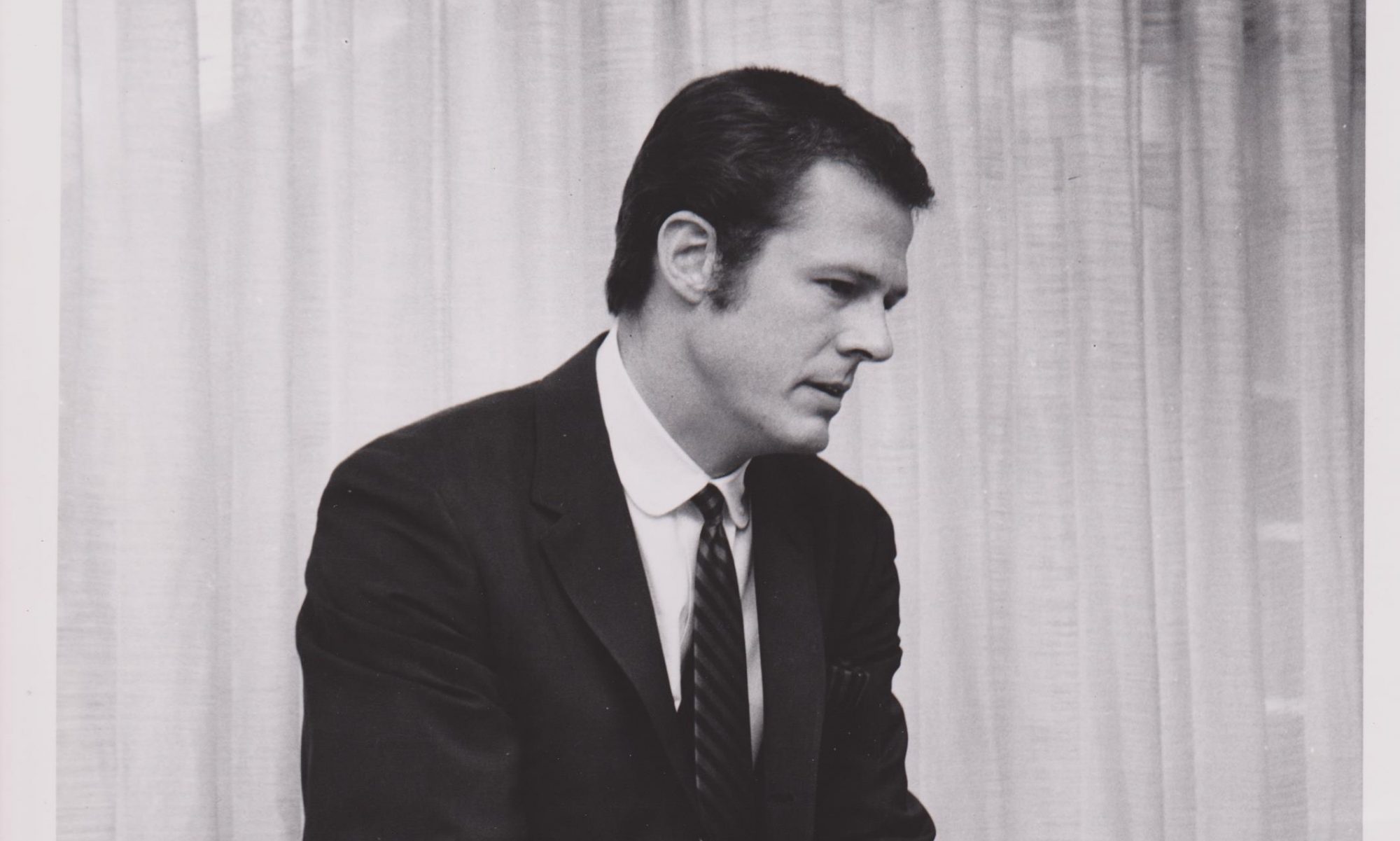
I SPY, which premiered 50 years ago this week on September 15th, 1965, ran for 83 episodes and if you think it was easy compiling a Top Ten list, you’d be mistaken. Most of those 83 could probably be easily shoved into this list. My handicap in trying to come up with a list on my own is the fact that I have not seen all of season three. So I put the question out to other fans on Facebook and over at the I SPY FORUM to try to come up with The List of the 10 best I SPY episodes. These would be the ones that just stick in your mind, the ones that if you were introducing someone new to the show you would have them watch, the ones that had the best story lines, the best performances, the best use of exotic scenery, the best score by Earle Hagen – and more often than not, all of these elements would be in the same episode!
So here we go, in order of season/air date…
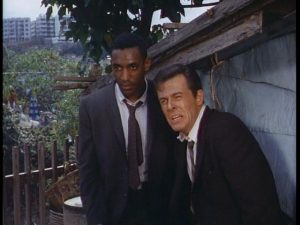
So Long, Patrick Henry (Season 1, Episode 1)
I SPY’s original pilot episode, “Affair in T’Sien Cha,” was already in the can, promo photos were being used by the press but NBC wasn’t happy with it. They decided not to go with “Affair” and instead, selecting from other episodes completed, they picked this one to set the tone for the series. And they couldn’t have picked a better episode. Written by series star Robert Culp, the episode features Ivan Dixon (Hogan’s Heroes) as a disgruntled US Olympic athlete who defected to China after the ’64 Olympics. Appearing to not be happy with his decision after a year, the US government is prepared to offer him a chance to come back and Scotty and Kelly are sent to deliver the message. The episode has a great mix of drama and comedy and overwhelmingly succeeded in starting the series off on the right foot.
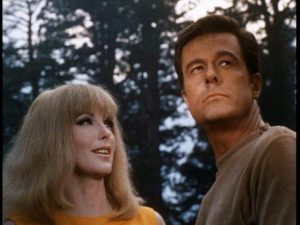 Tatia (Season 1, Episode 10)
Kelly falls for a freelance photographer, Tatia Loring, who Scotty suspects is an enemy agent. Nearly everyone Tatia has ever photographed has ended up dead. Kelly’s feelings are strong and he doesn’t believe his partner – to the point they have a knock down drag out fight over it. Set in Japan, the episode showcases the Japanese scenery and backdrops beautifully and has an excellent mix of romance and angst.
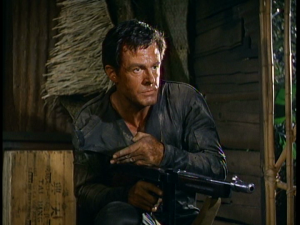 The Tiger (Season , Episode 15)
Prior to taking the role of Kelly Robinson in I SPY, Robert Culp had written a script for a pilot for a potential spy series called “Danny Doyle.” That script was reworked and became this episode. Kelly is sent on a dangerous mission to Vietnam to locate a philanthropist doctor who has gone into hiding. The doctor’s daughter, Sam Than McLean, a US government agent herself, is captured by the enemy in order to lure the doctor out. Scotty waits in the wings to assist in picking Kelly, Sam and her father up but they are under a desperate time table – the US Airforce is set to bomb the area whether Kelly and all make it out or not.
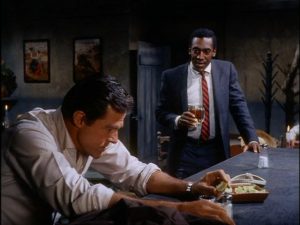 Bet Me a Dollar (Season 1, Episode 20)
The most dangerous thing Kelly can do is get bored. And he does in this episode which prompts him to challenge Scotty to “find” him. The game would be fun, except it takes on a serious turn when Scotty finds out that the knife wound Kelly suffered prior to the challenge has exposed him to anthrax. Meanwhile, Kelly befriends a young Mexican boy who accompanies him through the “game.” Kelly, however, gets sicker as the challenge goes on but refuses to let Scotty find him and it’s up to the young boy to be Kelly’s salvation.
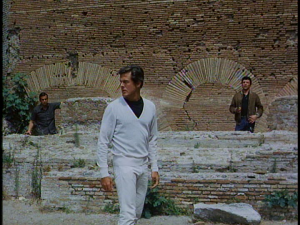 Vendetta (Season 2, Episode 4)
What did I say about Kelly getting bored? This time he’s hanging out by the pool of the hotel he and Scotty are staying at when he spots an attractive Italian girl. She turns out to be bait for a set up and Kelly is held against his will by the family of a man who was killed during the Korean War under Kelly’s command. Kelly is accused of having shot the man in the back and is placed on trial by the family. If convicted, his sentence is death.
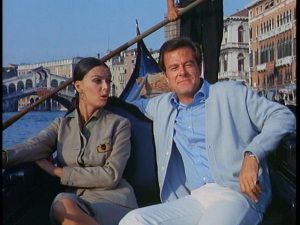 Bridge of Spies (Season 2, Episode 9)
Sheesh, you’d think Kelly would be more careful of beautiful women by now but…nope! This time it’s an Italian tourist guide (Barbara Steele) who sets him up so she and an accomplice can retrieve information on other agents and take them out of circulation. Scotty and Kelly’s set ups for contact with other agents are super secretive and the loss of the agents starts to make Scotty and Kelly suspicious of each other.
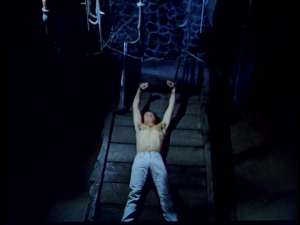 Room with a Rack (Season 2, Episode 21)
Quite possibly the most disturbing opening for television at the time, we see Kelly chained to a medieval rack, stretched. Subsequent images follow, making it clear that Kelly has been tortured. We then see him in a hospital, recovering – and that’s all before the opening title sequence. He’s given a 30 day vacation but at the same time the Department thinks he’s damaged beyond repair. While on break, Kelly is happy to meet an old friend but the enemy agents who tortured him have found him too. Culp’s performance is fantastic as the nearly broken Kelly, who flinches and cowers much too easily after his ordeal and falls to his knees in tears when he’s brought back to the torture chamber for the second time.
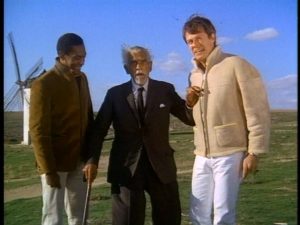 Mainly on the Plains (Season 2, Episode 22)
Kelly befriends Don Silvando, a scientist (Boris Karloff), in Spain and with Scotty must convince him to work for the US. (The Communists are attempting the same but when their agent fails to befriend the scientist they just try to go with force). When Kelly and Scotty offer to drive with the Don to Madrid they discover that his car is full of books – hundreds of copies of all the same book, Don Quixote, in multiple languages. The Don loves the story so much, and has been under quite a bit of strain as of late, along the way to Madrid he has moments of hallucination and thinks he is Don Quixote. The Don saves a damsel in distress, battles the windmills and inadvertently releases a truck load of prisoners.
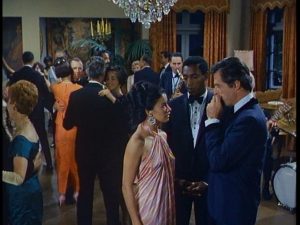 Magic Mirror (Season 2, Episode 25)
Sam McLean (seen previously in The Tiger) whom Kelly has fallen for is shown to be having an affair with a vicious dictator currently in exile. The dictator plans to return to power with help from the Soviets in exchange for allowing missiles to be based in his country. Kelly and Scotty must find out what he’s up to, stop him and if need be, destroy Sam for her traitorous ways. But is she really a traitor?
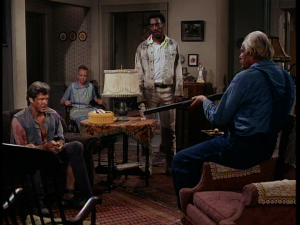 Home to Judgment (Season 3, Episode 14)
Consistently a top choice among fans as a favorite, I think I can safely assume that if any I SPY fan were to be stuck on a desert island and could only take one episode with them, this would be it. Kelly and Scotty blow an assignment and escape from the criminals they had been in pursuit of who are now in pursuit of them. The boys seek refuge on an old farm that turns out to be Kelly’s aunt and uncle, whom he hasn’t seen in years. Not wanting to bring heat down on his family, Kelly and Scotty figure to move on as quickly as possible but are caught by Kelly’s Uncle Harry as the bad guys are closing in.
Honorable Mentions:
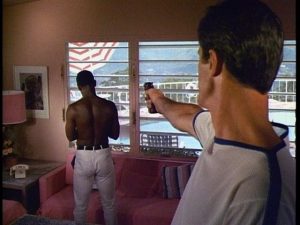 It’s All Done with Mirrors (Season 1, Episode 27)
Kelly is abducted by a Russian scientist (Carroll O’Connor, totally NOT Archie Bunker here) and brainwashed into believing that Scotty is a traitor and must be killed. Kelly is controlled by light reflecting off a mirror and when he fails to kill on the first attempt, the department writes him off and wants him destroyed. Scotty doesn’t believe his partner has deliberately gone rogue and manages to finagle 48 hours to bring Kelly in or otherwise dispatch him himself.
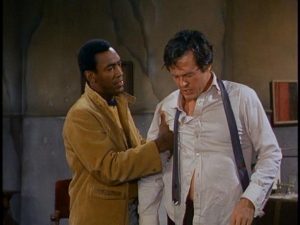 Blackout (Season 2, Episode 24)
Kelly woos a Russian ballerina in order to try to find out who in the ballet company is passing information. He wakes up in a seedy hotel in Spain, the ballerina dead and he unable to recall what’s happened. Colonel Benkovski of the KGB gives Kelly and Scotty approximately 12 hours to figure out what happened and who killed the ballerina before taking the matter to the Spanish authorities.
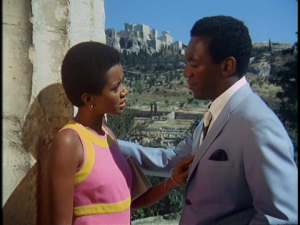 Laya (Season 3, Episode 3)
A Central African country, recently independent thanks to the Communists, has been receiving arms shipments from the same. Scotty is assigned to befriend an embassy clerk who has access to the information but the assignment becomes complicated when he develops genuine feelings for the woman.
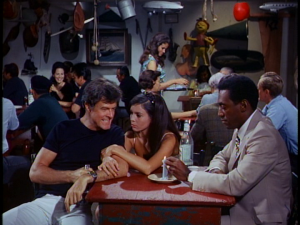 The Lotus Eater (Season 3, Episode 12)
Scotty loses contact with Kelly for 10 days eventually finding him on a Greek isle, literally enjoying wine, women and song. Kelly claims he’s quit the service, has taken up light housekeeping with a pretty Greek girl and dances at the local tavern smashing plates over his head. Scotty suspects something’s up and when he’s jumped by two thugs who work for Sorgi (Sheldon Leonard, previously seen in “Three Hours on a Sunday Night”) he has no doubt. Kelly’s dependence on Ouzo isn’t by accident.
Think there’s an episode that should have been on this list? Let me know in the comments below!
~Lisa Philbrick
 When my friend casually tweeted “What should I write about,” I spent forty five minutes trying to convince him why I Spy should be remembered in its fiftieth anniversary year. The 144 character conversation ended with him apologizing that he couldn’t because of “the Cosby thing.” And therein lays the problem. We’ve known about “the Cosby thing” since 1997, but it’s social media for better that has convicted him and for worse condemned innocents who didn’t know they danced with a demon.
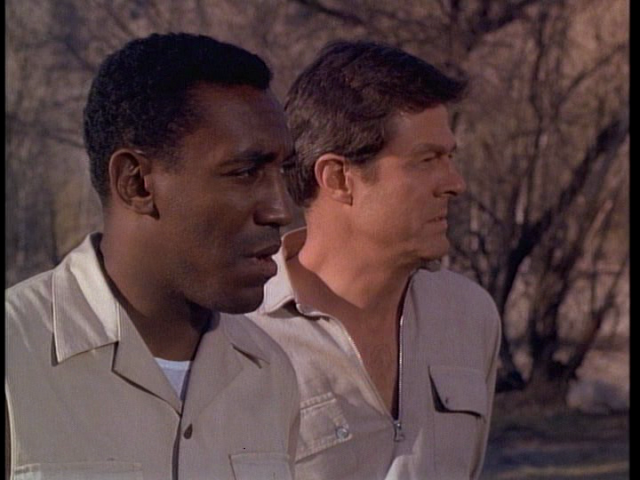 I Spy was one of the few correct and true things NBC has ever done. The nation needed to see in a non-proselytizing manner that all men are created equal. We were given in a weekly fifty minute non-statement, two men literally equal in size and stature sharing a meal, a room, a mirror, a bathroom. Nothing mattered as long as they got the job done and had fun. The end. This steady dose of Kelly Robinson and Alexander Scott walking side by side, living life together was absorbed subliminally and obviously and hearts began to change. Self-doubt about whether it was really OK to sit next to your classmate and eat off each other’s plates, finish their drinks, go camping with them, was obliterated. Ninety episodes later Alexander Scott made it clear to young men they no longer had to fear being the nerd who had done so well scholastically because being so didn’t negate your ability to be a man. To be a good human being.
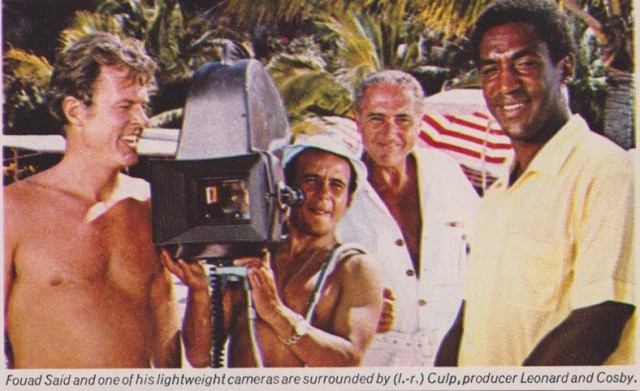 This equipment also threatened to push out the antiquated cameras, lights, mikes, and men that had been Hollywood staples for years, and no one was happy about that. For most of the time I Spy was filmed Said could not join the unions you would have expected him to be a highly valued member of. That came only as the series was ending, as did other breakthroughs.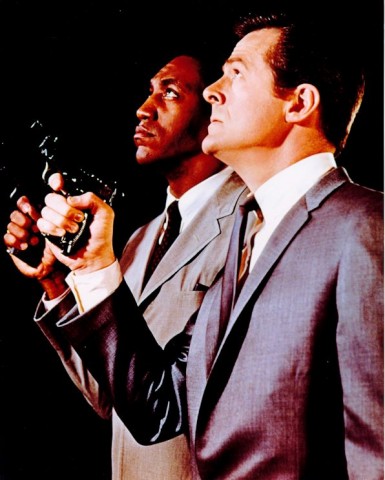
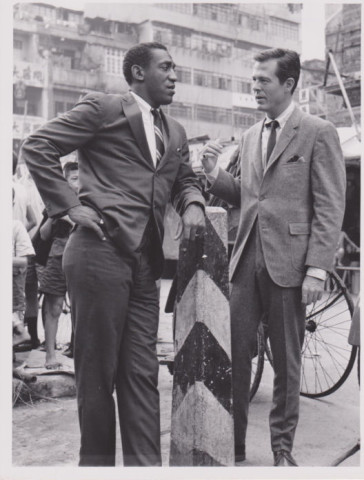 Both performers came to the attention of Sheldon Leonard via different paths but with the same fork in the road – Carl Reiner. Culp had written a script for a pilot for a possible series, a spy themed show that he took to Reiner. Reiner was on his way out of television at the time but had passed the script along to Sheldon Leonard. Leonard liked Culp’s idea, but liked his own better and as soon as Culp heard it, he concurred. Cosby’s name was mentioned to Leonard as having some potential for a future project and then Carl Reiner, again, passed Cosby’s name to Leonard after his son, Rob Reiner, saw Cosby on the Tonight Show and mentioned it to his father.
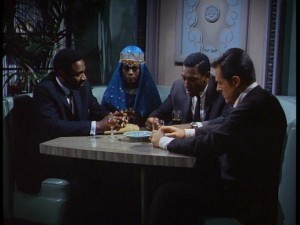 Unhappy with “Affair in T’sien Cha” NBC picked from the other episodes completed the Robert Culp penned “So Long Patrick Henry,” to be the episode that premiered the series. In the episode Elroy Brown, a disenfranchised black American Olympic athlete (played by Ivan Dixon), defects to China lured by the promise of cash. Although he gets more money, he’s kept on a short leash by his Chinese handlers and after a year appears disgusted with the treatment. Kelly and Scotty must make an effort to persuade him to return to the United States. Neither of them really care if Brown comes back to the US or not, since he’s basically a jerk toward both of them. He still thinks he got the better deal until Scott throws it in Brown’s face, telling him bitterly that he more or less sold himself back into slavery.
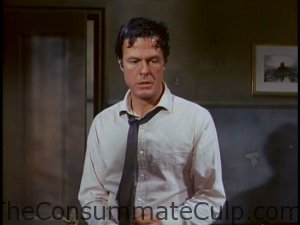 Ok, some of the storylines may have been fanciful, after all this IS television we’re talking about. But I Spy, unlike its various counterparts at the time, didn’t rely on gimmicks, trick weaponry or a Massive Evil Conglomerate Organization Bent on Taking Over the World (Megalomaniacs R Us) as it’s one and only enemy. Kelly and Scotty matched wits and outwitted standard Cold War adversaries from the Russians and the Red Chinese, but also drug lords, mobsters and a few old friends and acquaintances. When either of them were betrayed by somebody, you felt the shock and pain. When either of them were cut, they bled. They were beaten and battered and sometimes bordered on being broken. The spy business was dirty, ruthless, lonely and unforgiving. Innocents were killed while the guilty got asylum.
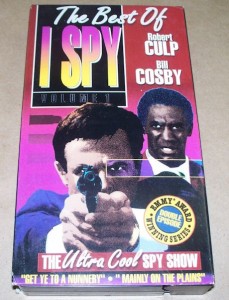 I Spy never cracked the top twenty in ratings but after the show’s end in 1968 it continued to have a decent fan base with reruns running through the 70s and into the 80s. Limited VHS releases came in the 1990s with a random selection of episodes. However, one particular release erroneously featured a photo of Culp and Cosby from their 1972 film Hickey & Boggs on the cover instead of an I Spy photo. I could say how the shortcomings of the internet back then (which just barely existed) wasn’t like the internet now and thus the people responsible for packaging couldn’t double check on the photo…but Hickey & Boggs photos have been erroneously tied to I Spy for years. Still are.
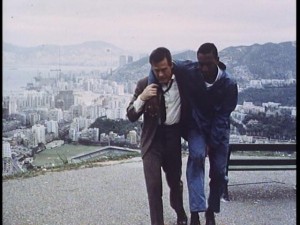 Which may explain why I Spy seems to fly under the radar as far as nostalgic pop culture. Cosby’s misdeeds certainly don’t help now either but the show doesn’t deserve to be punished further. Maybe it’s asking too much too soon but I Spy still matters. It showed us how it looks with no hate. Something we need to see more of, not less.
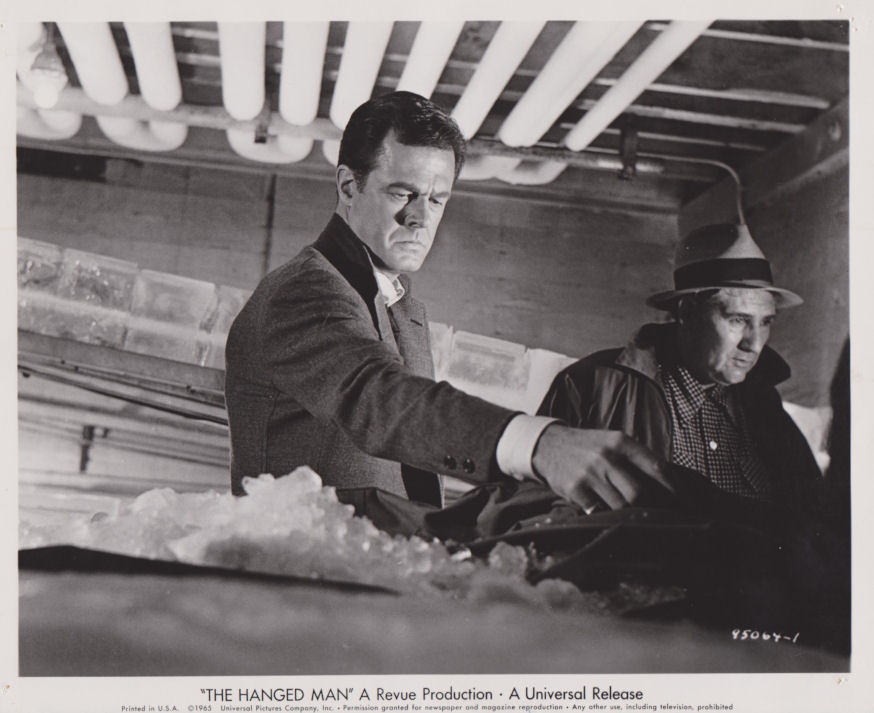 The Hanged Man (1964) – Directed by Don Siegel (Dirty Harry, The Shootist) this was the second TV movie to air and was an adaptation of the 1947 film Ride the Pink Horse. Set in New Orleans during Mardi Gras, Culp is Harry Pace who arrives to find out why a friend was killed and finds himself embroiled in shady union politics. Edmond O’Brien is the union boss with dirty hands, Norman Fell is the cop trying to find out why Pace’s friend was murdered and Vera Miles is the love interest whose allegiance to any man is questionable. Culp’s performance is dark and brooding and through the lies and deceit, the truth he seeks turns out to be more than he bargained for.
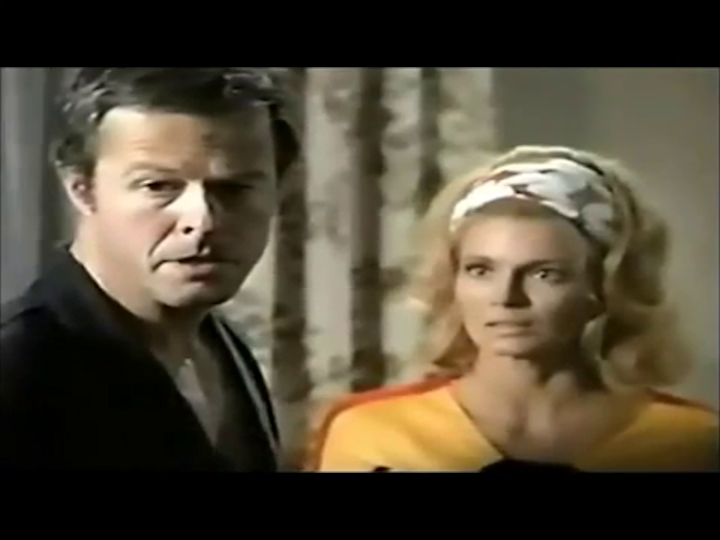 See the Man Run (1971) – Also known as The Second Face, the suspense in this one starts from the get-go and doesn’t let up. Culp is Ben Taylor, an alcoholic out of work actor who has recently moved into a new cheapie apartment with his wife Joanne (Angie Dickinson). Their phone number, previously issued to a Dr. Thomas Spencer (Eddie Albert), is the number a couple of kidnappers dial to say they have his daughter and demand a $50,000 ransom. Culp has no chance to tell them they have the wrong number and after he calls Dr. Spencer and tries to explain what happened, the doctor thinks he is the kidnapper. Caught in the middle and egged on by his wife, Culp runs the dangerous game of go between with the doctor and the real kidnappers for the chance at $150,000. Watching Culp switch roles from cool, threatening kidnapper to trembling victim to mere actor trying keep his wits about him is enough to induce schizophrenia. Angie Dickinson is great as she gets consumed with greed and the twist ending – you’ll never see it coming.
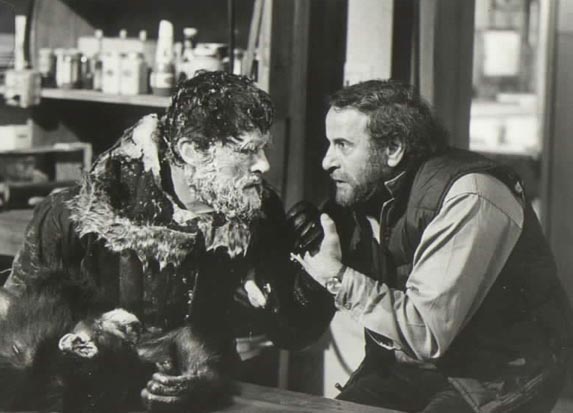 A Cold Night’s Death (1973) – I’m including this one because it seems to be on other people’s top list but here’s the thing: I haven’t watched it yet. I got as far into it as when the helicopter pilot is showing Culp and Eli Wallach around the lab, which is located on some godforsaken frozen mountain, and he shows them the part of the lab with the big vats that hold snow to melt to use for drinking water and I had this awful vision. I won’t share it but since I live in a place that has winters that look like where this laboratory was located, I haven’t had the hot foot to go back to it.
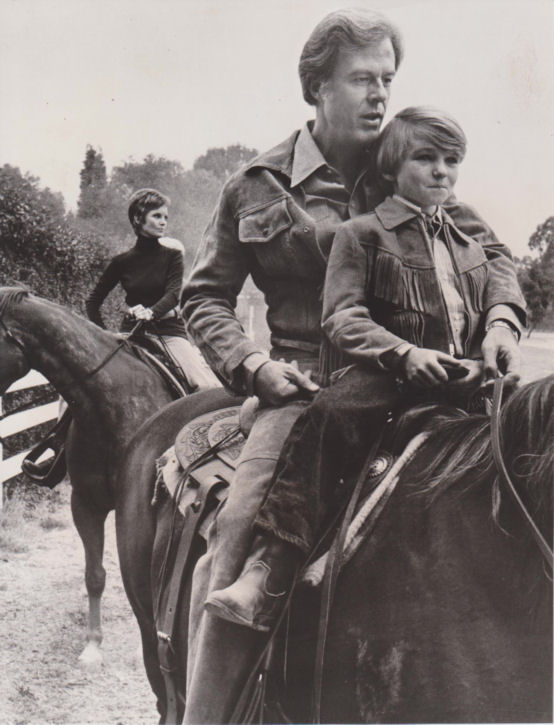 Outrage (1973) – Apparently based on true events, Culp is Dr. Jim Kiler, a veterinarian and family man, living in a gated community somewhere in California. The spoiled rich kids in the neighborhood enjoy raising a ruckus and go hot rodding around in their cars, risking life and limb to anyone who is out on the sidewalk or in the street. Kiler petitions to have speed bumps put in the neighborhood and after becomes the target of the punks and their escalating antics. The basic story line of the gentle man pushed too far, anyone who has seen Culp in his Columbo episodes will recognize the contained simmering anger in this one that builds up to a violent and, let’s face it, satisfying vigilante outburst at the end.
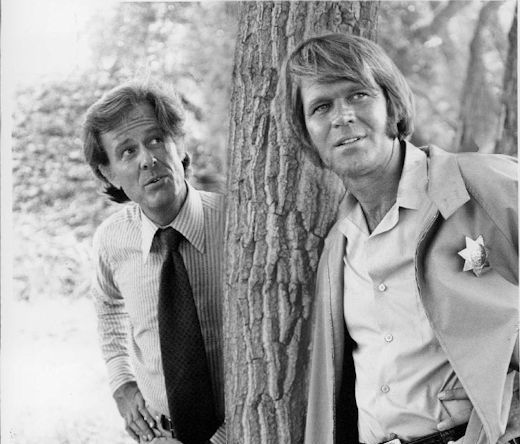 Strange Homecoming (1974) – Culp plays Jack Halsey, who left his small town 18 years earlier and sends postcards back home to his brother, Bill (Glen Campbell), from all these exotic locations all over the world where he does “business.” His business, however, is that of a jewel thief and while in Hawaii Jack adds murder to his resume. On the run from the law, he returns home to the surprise of his family and old friends, who are oblivious to his true trade. Campbell, who’s also sheriff of the town, starts to become suspicious of his brother. Culp is cool yet wild eyed and creepy in this one, having an especially awkward moment involving a pair of ladies nylon stockings (causing him to flashback to the murder in Hawaii). When the brothers finally clash, only one will win and the ending may surprise you a little.
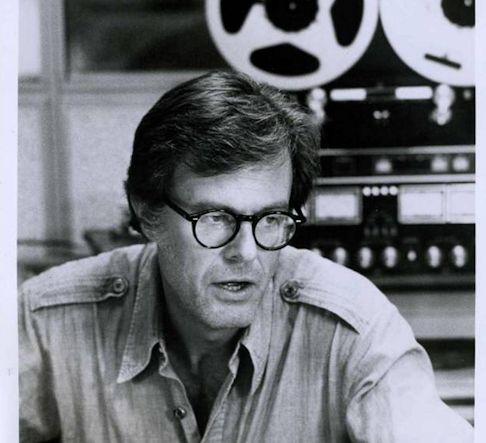 A Cry for Help (1975) – Culp channels his inner Don Imus in this one as a caustic talk radio host, Harry Freeman, who indulges in diatribes and insults his listeners for sport during the morning commute. When a young girl phones in saying she’s going to commit suicide, he blows her off, jokingly asking where she was and that he would join her. When his listeners start phoning in and taking him to point, including a psychologist, Culp scrambles to try to locate the girl via his listeners to stop her from going through with it. The best part of this is watching Culp turn from caustic to caring and seeing the humanity in the character come through…even though he masks it and denies it.
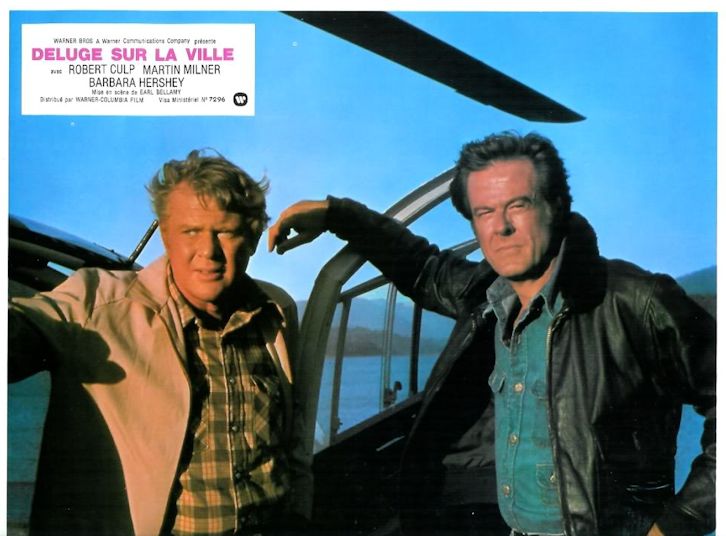 Flood! (1976) – Master of Disaster Irwin Allen (The Poseidon Adventure, The Towering Inferno) brings big screen disaster to the small screen with the story of a rain swollen lake, an earthen dam that can’t hold it back much longer and the small town of Brownsville that stands to be washed away when the dam breaks. Culp is helicopter pilot Steve Brannigan who ferries high paying clients back and forth to fishing cabins at the lake. After seeing the water level at the dam, along with a fresh leak, he tells fellow pilot and friend Paul Burke (Martin Milner) who tries to get the mayor and town council to consent to opening the dam to relieve the pressure. They won’t because it will ruin the fishing, thus ruin the tourism…which apparently is more important than, say, preventing the whole town from wiped out by the flood from the busted dam, which is exactly what happens (how’s the fishing now?!). Culp assists in rescue efforts with his bird and looks really good doing it, just saying!
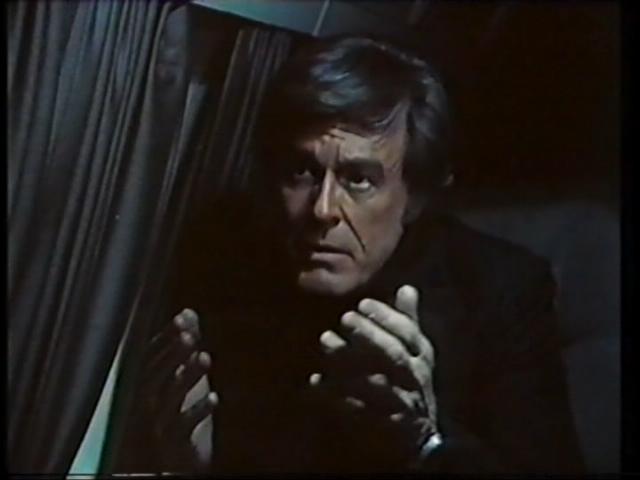 Spectre (1977) – Originally pitched as a pilot for a potential series created by Gene Roddenberry, Culp plays William Sebastian a renowned criminologist and dabbler in the occult. With his partner, Dr. Hamilton (Gig Young), the two are a modern day Holmes and Watson. They travel to England at the request of Anitra Cyon, who believes her brother Jeffrey has come under the influence of some kind of evil. All the Culp coolness you love is here along with a good mystery and very well done production.
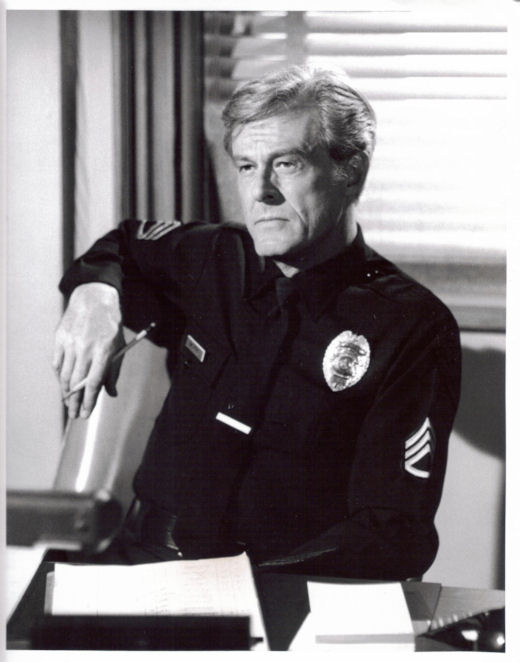 Last of the Good Guys (1978) – Culp once said in an interview that the earliest incarnation of “Maxwell” was in this, where he plays a tough, calcified, by-the-book (sound familiar?) police sergeant named Nichols that oversees a misfit squad of cops (including Dennis Dugan, Ji-tu Cumbuka, James Hong and Hampton Francher). When veteran cop Frank O’Malley (Larry Hagman) dies just days from retirement, the younger cops plot to manipulate Nichols by covering for O’Malley at roll call until his retirement date, so that his widow and kids can receive his pension. Nichols catches on to the ploy and after Officer Lucas (Dugan) attempts a last minute desperate shakedown on Nichols involving a “breach of promise” with a young blind girl, it comes down to whether the tough as nails Nichols sticks with the book regarding O’Malley’s pension or not.
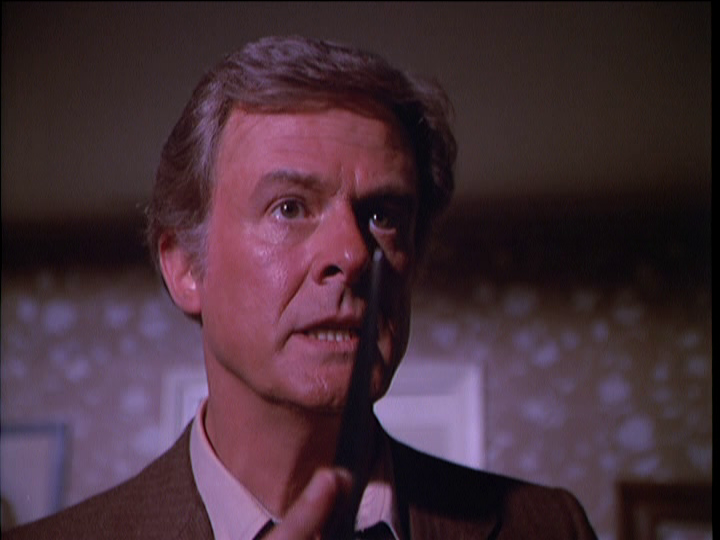 Killjoy (1981) – A murder mystery so damn convoluted you’re not sure who really died and who really did it until the very end. Culp is Lou Corbin, a cop and also a suspicious character in his own right, who knew the victim, Joy Morgan, and is trying to find out who killed her. A tip of the hat to Columbo with a touch of Maxwell with a bent, Corbin shows up on people’s door steps, pops in on them when they least expect it (especially when they go rummaging through the victim’s house) and essentially pesters everybody (just like Columbo!) but never lets on that he’s a cop until the end.
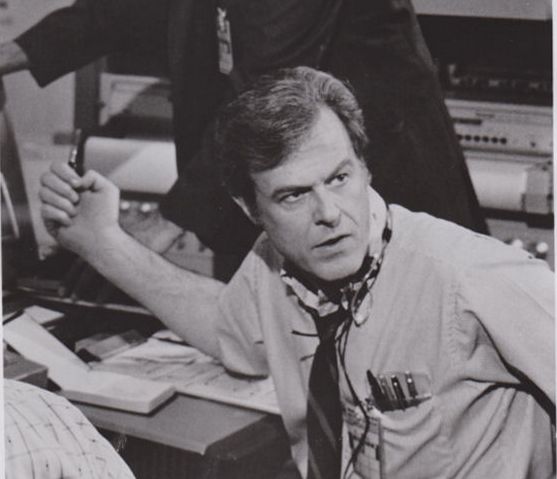 Houston, We’ve Got a Problem (1974) – Dramatization of the 1970 Apollo 13 crisis, only this one focused on the lives of the men who were on the ground at Houston Mission Control, having to work to figure out how to get the crippled space craft back to Earth and back to safety. Culp is Retro Officer Steve Bell, who suffers from a deteriorating heart condition that will essentially end his career if not his life before Apollo 13 makes it back to earth. Not knowing if the lunar module itself is damaged, Culp must figure a point of re-entry and calculate coordinates to bring the module safely back through Earth’s atmosphere. The other story lines run more melodramatic and the film was criticized at the time for being so (and for being overly fictionalized) but if you’re a Culp fan his performance alone is worth the watch.
 The Blue Lightning (1986) – Although he opens the movie, there’s not enough of Culp in this one, plain and simple. Culp is ex-IRA bomber and cutthroat criminal Lester McInally (complete with Irish brogue) operating in the Australian outback when he goes up against private investigator Harry Wingate (Sam Elliot) who is attempting to retrieve a priceless opal from him. The film is non-stop action and only slows down enough when Elliot takes a bullet in the lung from Culp (ha!). Character development is sparse but the Australian scenery is magnificent. I would have liked to have seen a scene showing Culp overseeing his den of debauchery at McInally’s Casino, ordering thugs around and all but, alas.
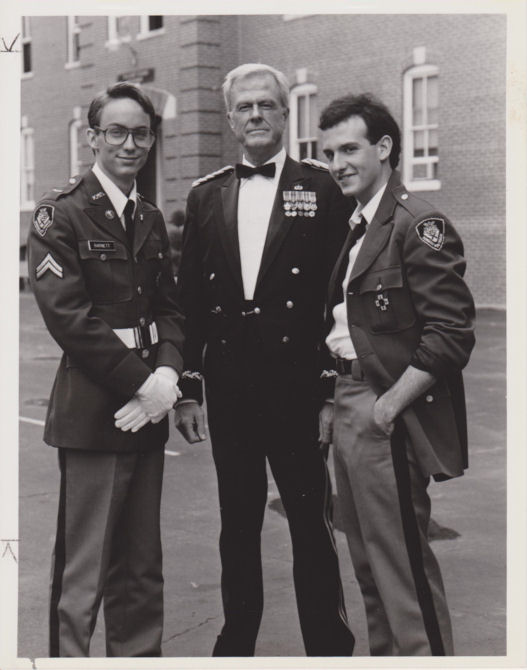 Combat High (aka, Combat Academy) (1986) – Military academy version of “Police Academy” (produced by the same people) Culp is in the Commandant Lassard role here (although not as air headed), as the head of a military academy. When two punk kids (Keith Gordon, Wallace Langham) are sent to his school, they turn it and him upside down. Culp suffers the typical sophomoric indignities in this one, including the entire dining table being upended on him in the mess hall dumping just about everything all over his uniform and his office is sabotaged six ways from Sunday. A young George Clooney plays Culp’s son and there’s a subplot involving the strained father/son relationship. The film is loaded with noted guest stars including Jamie Farr (actually in a uniform as opposed to his typical “dress” on MASH), Bernie Koppell, John Ratzenburger, Richard Moll, Dick Van Patten and Sherman Hemsley.